
9 Winter Mistakes Newcomer Families Make in Their First Canadian Snowstorm
Canada’s first snowstorm does not ease you in gently. One morning you wake up to an entirely different world outside your window: white, quiet, and completely unfamiliar and the practical reality of navigating it hits fast.
The snow is heavier than you expected, the wind is sharper than the forecast suggested, and somewhere in the chaos, at least one family member is already wearing the wrong shoes.
These nine mistakes are extremely common among families experiencing their first Canadian winter. None of them reflect poor judgement, they are things nobody tells you until it is already too late.
Here is what to know before the next storm arrives.
Mistake 1: The Puffy Coat Car Seat Trap
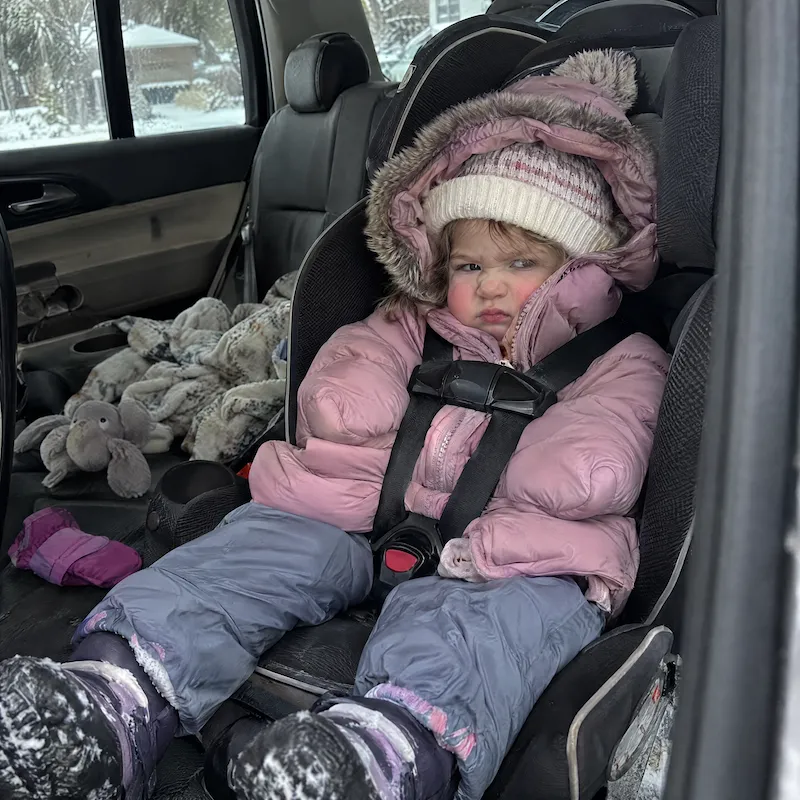
Before you do anything else, remove your child’s thick winter coat before clicking them into their car seat. A puffy coat compresses dramatically under the harness straps during a collision leaving dangerous slack between the child and the restraint, even when the buckle feels snug on a normal morning.
The correct approach is a thin fleece base layer under the harness, with the coat placed over the child like a blanket once they are fully strapped in.
To check whether the harness is tight enough after buckling, try to pinch the strap at your child’s shoulder between two fingers. If you can gather any fabric at all, the harness is too loose. This test works regardless of what your child is wearing.
Mistake 2: The “Fashion Over Function” Boot Disaster
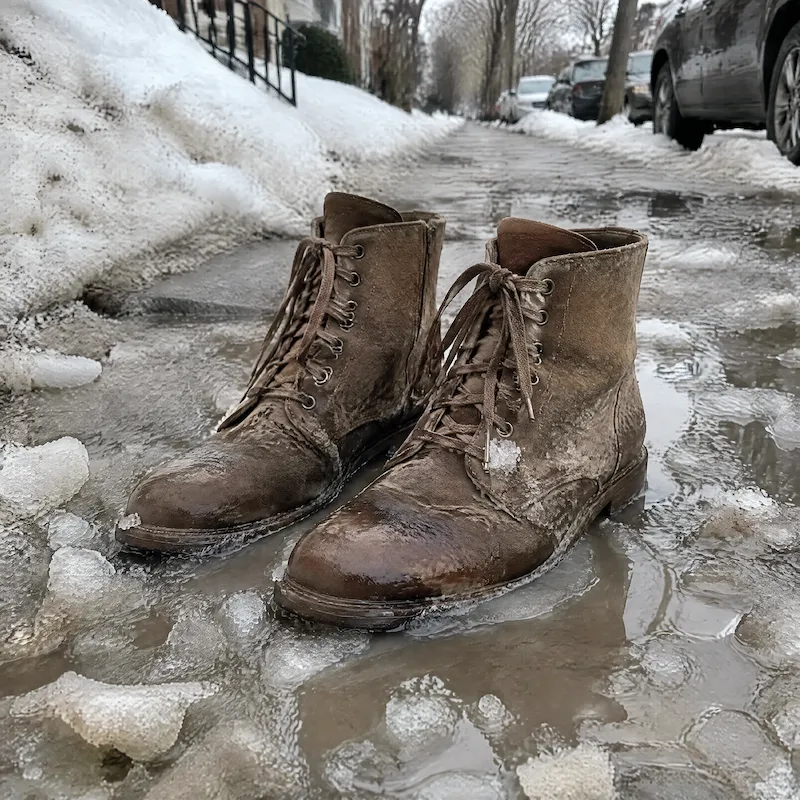
The first Canadian winter boot purchase is a turning point most families underestimate.
Suede, canvas, and fashion boots look excellent in the store, but they absorb moisture and freeze within 20 minutes of a Canadian snowfall, leaving your feet cold, wet, and deeply regretting the decision.
What you need is a waterproof rating, an insulation rating in Celsius (look for at least -25°C), and a non-slip sole in that priority order, before style enters the conversation at all.
Worth knowing: “Water-resistant” and “waterproof” are not the same label. Water-resistant boots hold up in light flurries. They will not hold up in a Canadian slush puddle after a full day of snowfall. Look specifically for “100% waterproof” on the label before you buy.
Mistake 3: Defrosting the Windshield with Hot Water

Worth knowing: Pouring hot water on a frozen windshield is one of the most expensive shortcuts you can take on a cold Canadian morning.
The rapid temperature change causes the glass to crack or shatter and windshield replacement in Canada can cost several hundred dollars, depending on your vehicle and whether your insurance covers it. Vehicles with front-facing cameras may cost significantly more.
The correct method is a proper ice scraper with a brush end (available for under CAD20 at Canadian Tire), running your car’s defroster on low heat, and giving it five minutes to do its work before you begin scraping.
One additional tool worth keeping in your coat pocket, not in the car, where it will be frozen inside a locked vehicle when you need it most is a can of automotive de-icer spray.
It costs under CAD10 at most Canadian Tire locations and works on frozen door locks as well as lightly iced glass. On the mornings when you cannot get into the car in the first place, it earns its price immediately.
Mistake 4: Storing the Snow Shovel in the Backyard Shed

This mistake tends to happen exactly once. After an overnight snowstorm, your backyard shed is inaccessible buried under 30 to 90 centimetres of dense, heavy snow depending on where you live in Canada, with a door you physically cannot open from the outside.
Keep your snow shovel propped beside your front door before the first snowfall of the season arrives. Your future self, standing in the dark at 6:30 a.m. before the school run, will have strong opinions about this particular decision.
Worth knowing: Most Canadian municipalities require homeowners to clear the public sidewalk in front of their property within 24 hours of a snowfall ending. Failure to do so can result in a fine. The specific timeframe varies by city, so check your local municipal website once before winter begins so you know exactly what is expected of you.
Mistake 5: Trusting a Stroller in a Snowbank
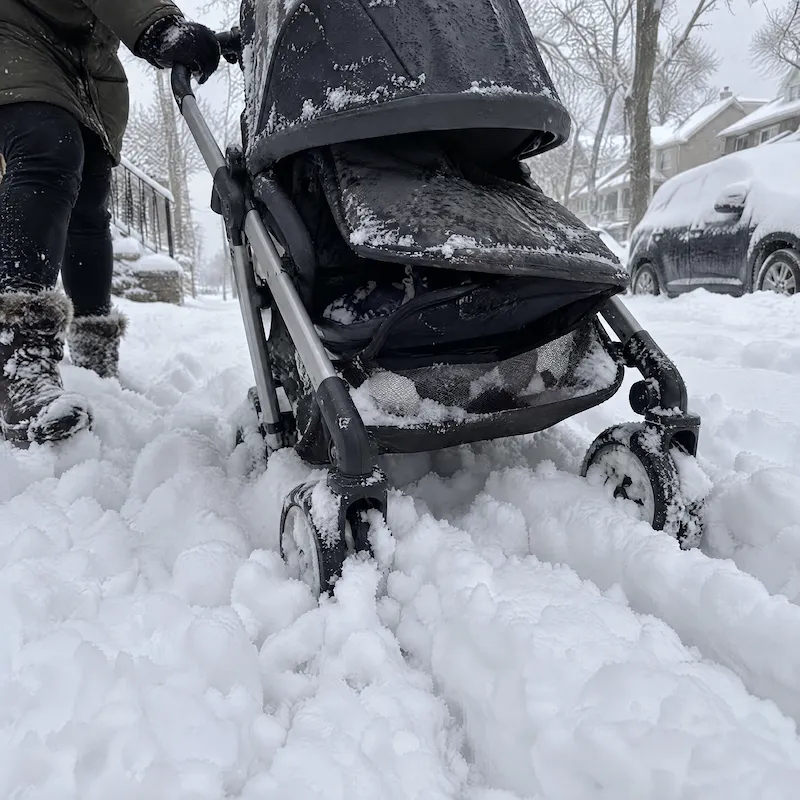
Standard stroller wheels and Canadian snowbanks are fundamentally incompatible.
If you are navigating an unplowed sidewalk or a residential street after a heavy snowfall, most strollers will stop moving entirely within a few metres of your front door.
A basic plastic pull-sled available for around CAD20 to CAD30 at Canadian Tire or Walmart, though prices vary by season is genuinely the more practical solution for toddlers on heavy snowfall days.
Bundle them in, add a blanket, and you will move through snow with considerably less effort than any stroller will allow.
If your baby is under 12 months and not yet walking, a structured carrier worn under your own winter coat keeps them warm against your body heat and leaves both hands free for navigating icy sidewalks.
Mistake 6: Ignoring the “Feels Like” Temperature
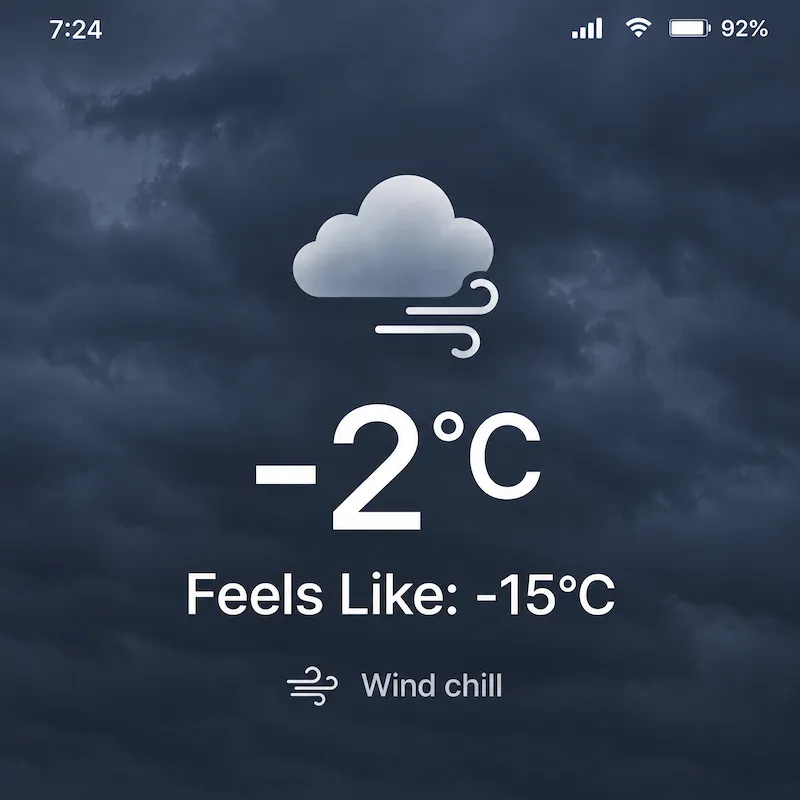
The number on the forecast is not the number that matters for dressing your family.
Wind chill: the “Feels Like” reading on your weather app is what determines how quickly exposed skin loses heat, and across most of Canada, the gap between the air temperature and the wind chill can be 10 to 20 degrees on a blustery morning.
Dress your family for the “Feels Like” number, every single day. If it reads -15°C, that is your planning temperature regardless of what the actual thermometer says.
Environment and Climate Change Canada issues wind chill warnings when the reading reaches -28°C, the threshold at which frostbite on exposed skin can develop within 30 minutes.
At -40°C wind chill, that window drops to under ten minutes. These are not abstract numbers for prairie winters or January in Ottawa. Check the warning level, not just the temperature, before you decide how long the children are spending outside.
Mistake 7: Buying Knit Gloves for Snow Play
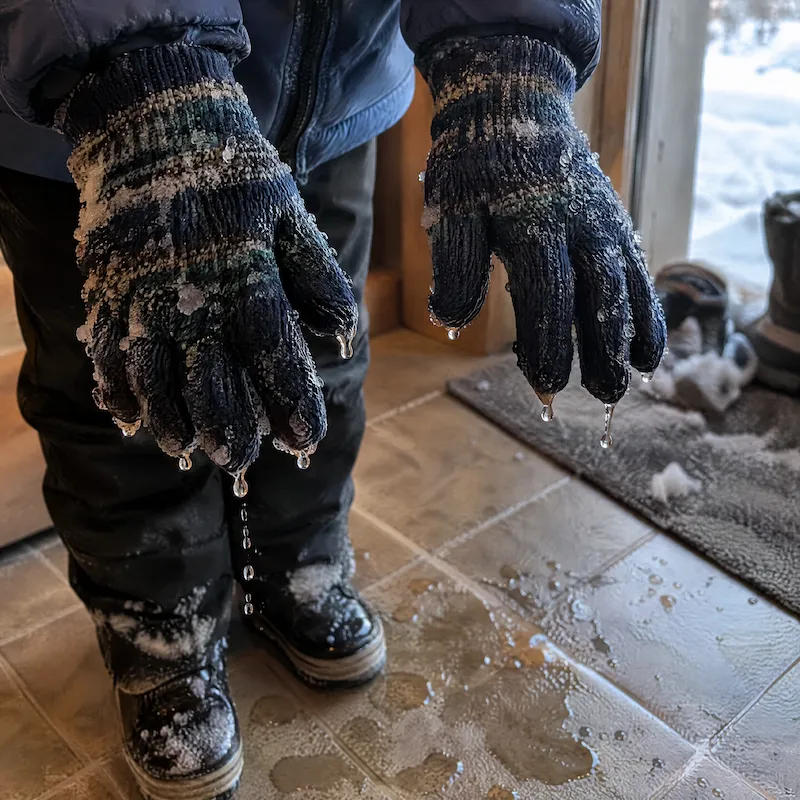
Knit gloves are a reasonable choice for the school run or a short walk to the car. They are not a reasonable choice for building a snowman, having a snowball fight, or any activity where small hands are in direct contact with snow for more than a few minutes.
Knit fabric absorbs moisture quickly, freezes fast, and small hands lose heat faster than adult hands under those conditions. Waterproof, insulated mittens are the correct gear for outdoor snow play and most Canadian families keep both: knit for the commute, waterproof mittens for the backyard.
Mistake 8: Running the Heat Without a Humidifier

Canadian indoor heating runs almost continuously from November through March, and it strips moisture from the air at the same rate that it warms the room.
The result is dry skin, cracked lips, bloody nose, disrupted sleep for young children, and enough static electricity to make every doorknob in the house feel like a minor incident.
A basic cool-mist humidifier in the bedrooms particularly for children under six makes a measurable difference to sleep quality and general comfort through the long winter months.
If you are choosing between a cool-mist and a warm-mist model, the cool-mist unit is the lower-maintenance choice for a family with young children.
Warm-mist humidifiers heat the water before releasing it, which means the tank breeds bacteria and mould faster and requires weekly cleaning to stay safe. Cool-mist models do not carry the same maintenance burden.
Mistake 9: Ignoring the Hallway Puddle Zone
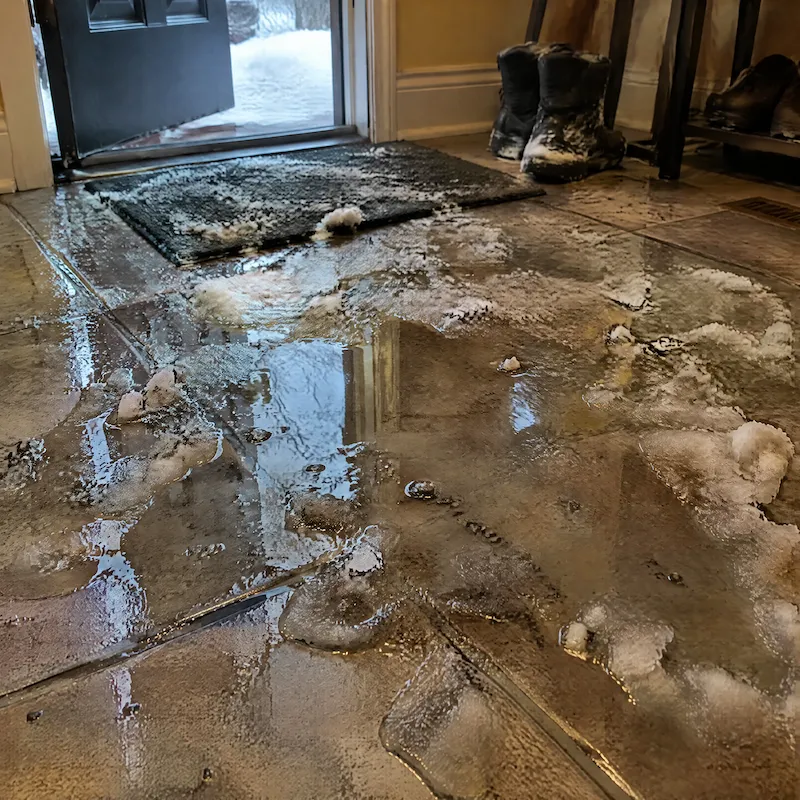
Every boot that walks through your front door in winter carries snow, road salt, and moisture with it.
Without a dedicated drip zone at the entrance, that melted snow spreads across your floor within minutes. Road salt is corrosive, it strips the finish off hardwood floors and leaves white residue stains on tile and carpet that are genuinely difficult to remove once they set.
The fix is a wide rubber boot tray placed directly inside the front door, a coat hook or rack for wet outer layers, and a firm household rule: boots come off at the door, every single time.
A door mat outside the entrance captures the first layer of snow before boots come inside. A boot dryer, available for under CAD50 means wet boots are dry and ready by morning rather than still damp at 7 a.m. for the school run.
A boot tray costs under CAD30. Between the two, your floors and your mornings will be in considerably better shape for the next five months.
If this helped your family prepare for the season, share it with another newcomer family facing their first Canadian winter; the car seat tip alone is worth forwarding.
